Scene 05 · AI · 2026–
OMNIS — running a whole business group from one system
The management system for a group of four companies, built by one developer and in production in two and a half weeks.
- Role
- Sole developer — architecture, database, backend, frontend, integrations, deployment and operations.
- Stack
- Next.js 16 · React 19 · TypeScript · Supabase (Postgres, RLS, Edge Functions, pg_cron) · PL/pgSQL · Anthropic API (Claude) · Vitest · GitHub Actions · Vercel · n8n
The problem
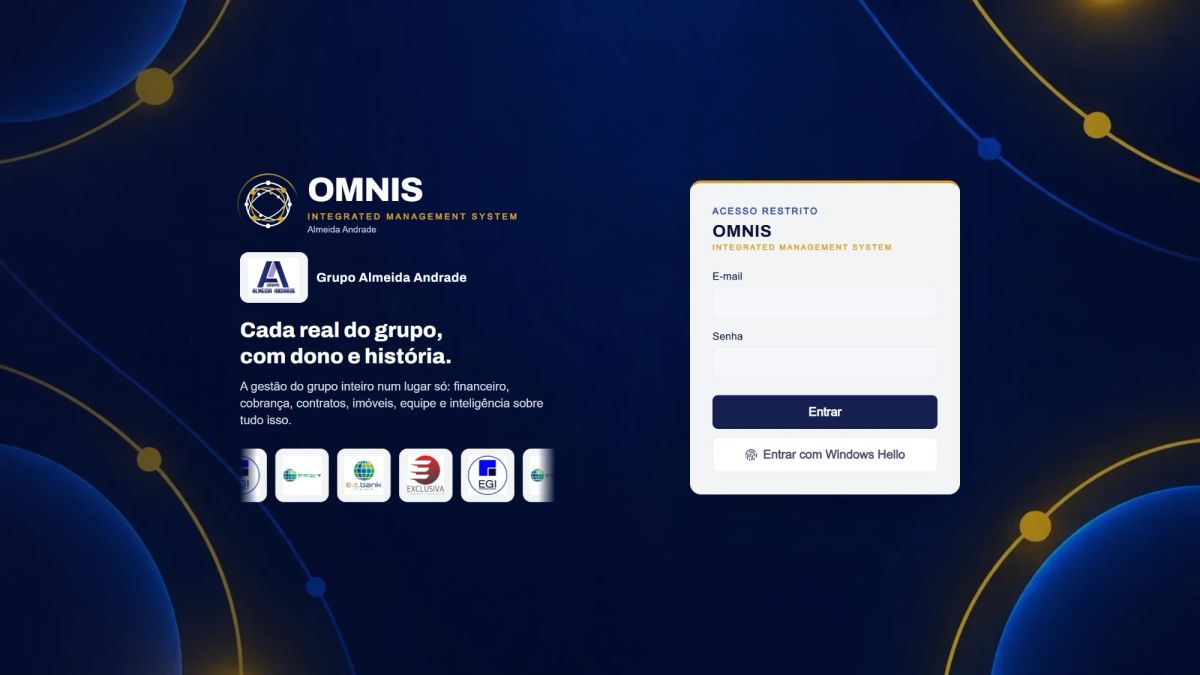
Grupo Almeida Andrade runs a construction company, a real estate agency, a solar energy company and a finance company. Management lived in spreadsheets behind one shared login: nobody knew who changed what, and every report was assembled by hand.
What I built
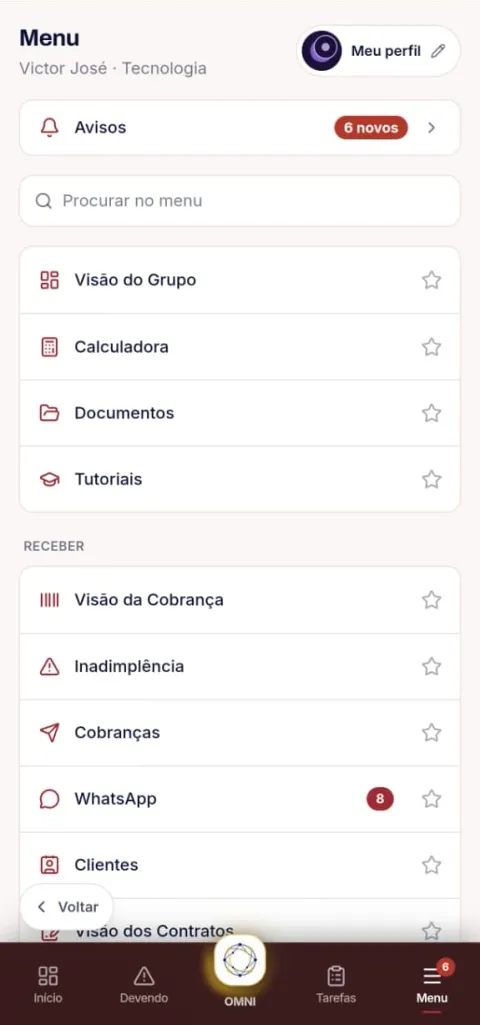
I joined as an IT intern on Aug 13, 2026. Two and a half weeks later OMNIS was in production. It brings together:
- results per company and per development, synced daily with the ERP;
- overdue accounts and automatic billing by bank slip and Pix;
- contracts and documents with ICP-Brasil digital signatures;
- properties, solar plants and lawsuits tracked by bots;
- the billing team’s WhatsApp inbox;
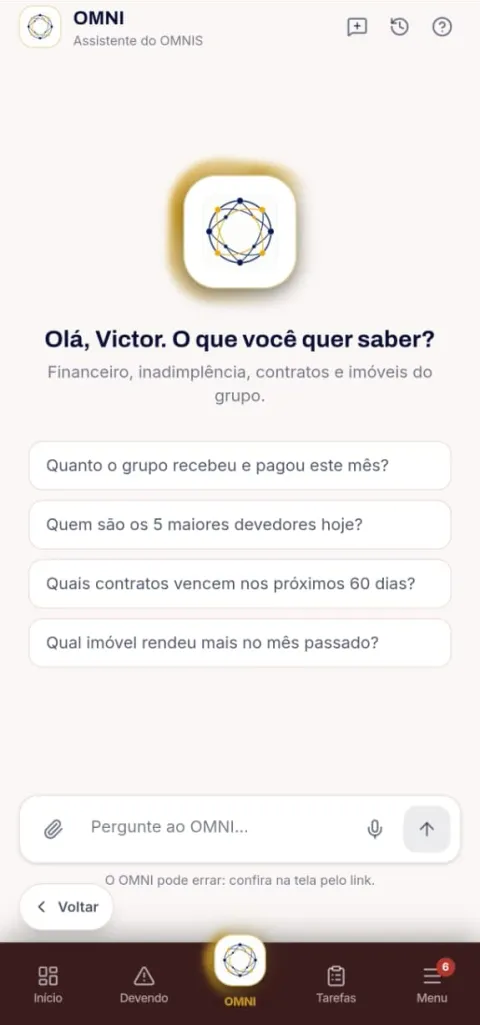
- OMNI, an assistant built on Claude that answers questions about the group’s data.
Decisions
Security in the database, not just the UI. Every person’s permissions are checked at four layers: menu, route, action and Row Level Security in Postgres itself. If the interface fails, the database still says no.
OMNI only reads. The assistant queries the database through a read-only connection enforced by Postgres, and every answer links to the screen the number came from — the UI says it can be wrong and asks you to check.
Bots instead of manual routines. 24 scheduled Edge Functions handle ERP sync, billing and payouts, court cases, city certificates, solar output and weather.
By the numbers
- 802 commits between Aug 18 and Oct 9, 2026
- 2,213 automated tests, run in CI on every push
- 236 hand-written SQL migrations
- 24 scheduled bots in production
- 82 screens